 by Admin
 Vietnam is entering a new phase of foreign direct investment (FDI) growth. In the first six months of 2026, total registered FDI reached USD 34.65 billion, representing a 61% increase compared to the same period last year. Notably, investment continues to concentrate in semiconductors, electronics, high technology, clean energy, and smart manufacturing.
What these projects have in common is their large capital scale, technological complexity, and stringent requirements for rapid operational readiness.
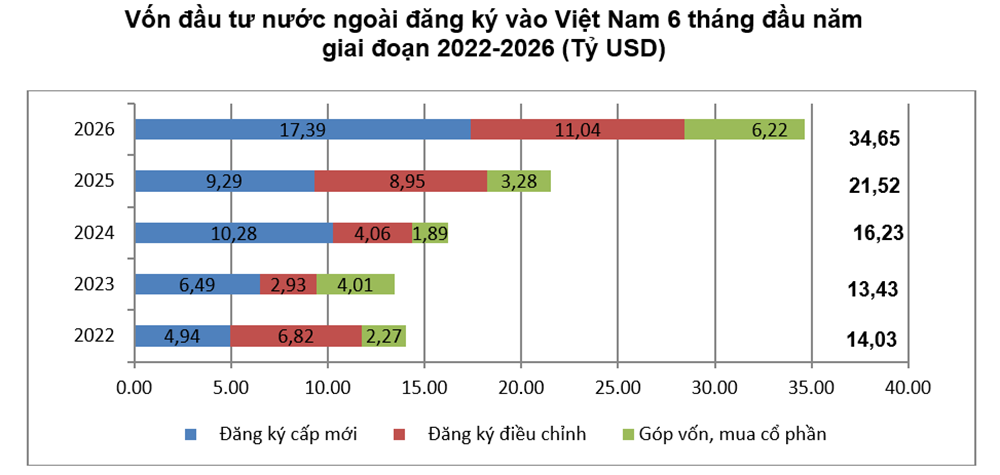
Total Registered Foreign Direct Investment (FDI) in Vietnam, H1 2022–2026 (USD Billion)
This shift is also transforming how international investors assess construction projects.
In the past, the primary objective was to build at the lowest possible cost. Today, however, a greater priority is ensuring that production capacity becomes operational at the right time. In a speed-driven economy, completing a factory ahead of schedule does more than accelerate revenue generation. More importantly, it enables businesses to secure orders, integrate into supply chains at the optimal moment, and capitalize on favorable market growth cycles.
In other words, for many FDI projects today, the timing of operational readiness is just as valuable as the facility itself.
When Choosing a General Contractor Becomes a Capital Allocation Decision
From a financial perspective, construction costs represent only a portion of the total investment.
What investors are increasingly concerned about are the costs that do not immediately appear on the project budget:
- Additional expenses resulting from design changes;
- Opportunity costs caused by delays in bringing the factory into operation;
- Financial costs incurred when investment timelines are extended;
- Long-term operation and maintenance expenses after project handover;
- Legal and regulatory risks that could delay production activities.
These costs often far exceed the savings achieved by selecting a contractor based solely on a lower bid price.
As a result, for international investors, choosing a general contractor is no longer merely a construction procurement decision. It has become a capital allocation decision because it directly impacts cash flow generation, capital efficiency, and the overall competitiveness of the project.
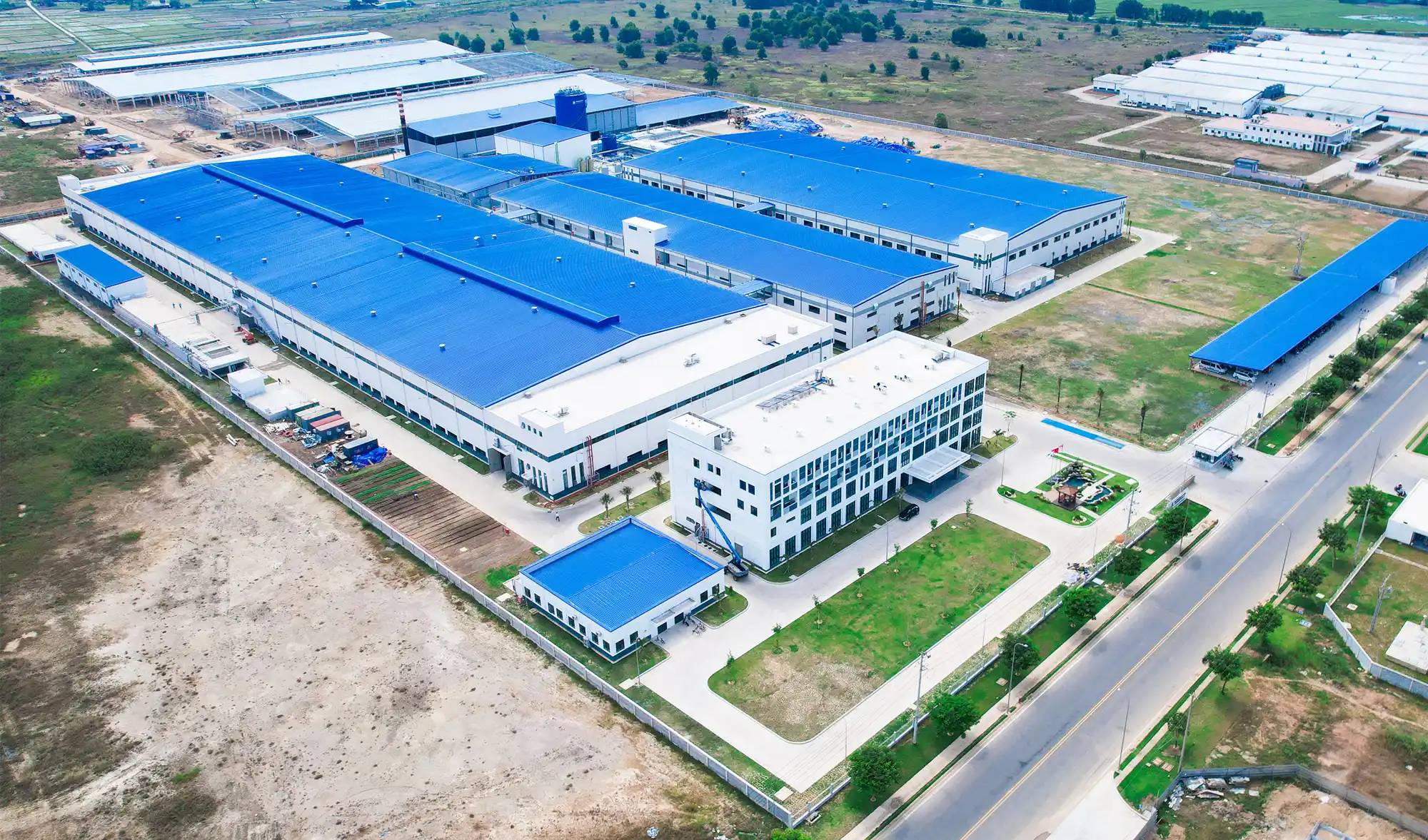
-min.jpg)
Time-to-Market Is Becoming the New Competitive Advantage
In many high-tech industries, product life cycles are becoming shorter while global supply chains continue to evolve. In this environment, companies that bring factories into operation on schedule gain a significant advantage in securing orders, expanding market share, and optimizing capital turnover.
This is why many international investors are no longer asking, “Who can build at the lowest cost?” Instead, they are increasingly focused on a different question:
“Which partner can bring the project into operation on time while minimizing risk?”
This shift is one of the key reasons why the Design & Build model is becoming increasingly preferred.
The greatest value of Design & Build does not simply lie in having a single point of responsibility. Its real value comes from integrating design, engineering, and construction from the outset. This alignment accelerates decision-making, minimizes conflicts among stakeholders, and reduces costly changes during project execution.
The Value of a Factory Begins After Handover
A project completed on schedule is not necessarily a successful investment.
For manufacturing businesses, success truly begins when the production line operates reliably for years afterward. This is why investors are paying increasing attention to technical details that may appear minor but have a direct impact on production efficiency.
For example, in factories utilizing robots, AGVs, ASRS systems, or automated warehousing solutions, floor flatness is more than a construction quality requirement. It is a critical foundation for ensuring equipment accuracy, minimizing vibration, reducing operational errors, and lowering maintenance costs throughout the facility's lifecycle.
Similarly, a durable waterproofing system does more than preserve the building's quality. It also helps minimize the risk of production disruptions caused by failures that may occur years after commissioning.
Although these factors are rarely highlighted in project budgets, they have a direct influence on long-term investment performance. This is why many FDI manufacturers increasingly evaluate projects based on total lifecycle operating costs rather than solely on construction costs at the time of handover.
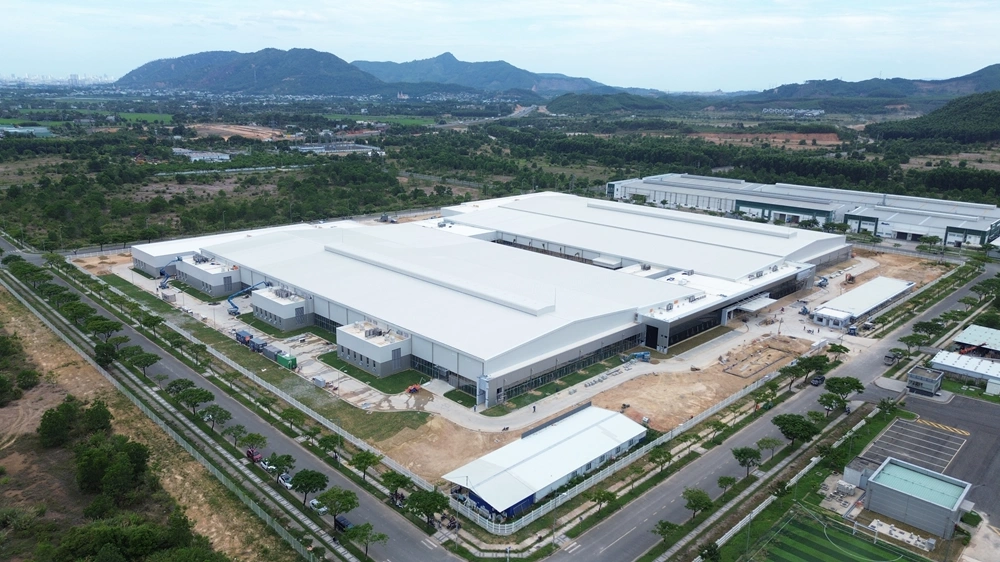
A General Contractor's Capability Is Measured by the Value a Factory Creates
In industrial construction, a contractor's capability is not demonstrated through marketing claims. It is proven by the ability to help a project achieve its intended investment objectives.
This includes maintaining project schedules, minimizing cost overruns, coordinating effectively with equipment suppliers, and ensuring stable factory operations after handover.
For this reason, the percentage of clients who continue to select the same contractor for expansion phases is widely regarded as one of the most reliable indicators of contractor performance.
Design & Build: When Construction Becomes Part of an Investment Strategy
Rather than viewing Design & Build simply as a project delivery method, Dinco considers it a comprehensive investment risk management system throughout the entire project lifecycle.
The application of Building Information Modeling (BIM) enables design and construction teams to work on a unified platform, helping shorten project delivery schedules by three to four months while optimizing approximately 7-10% of total investment costs.
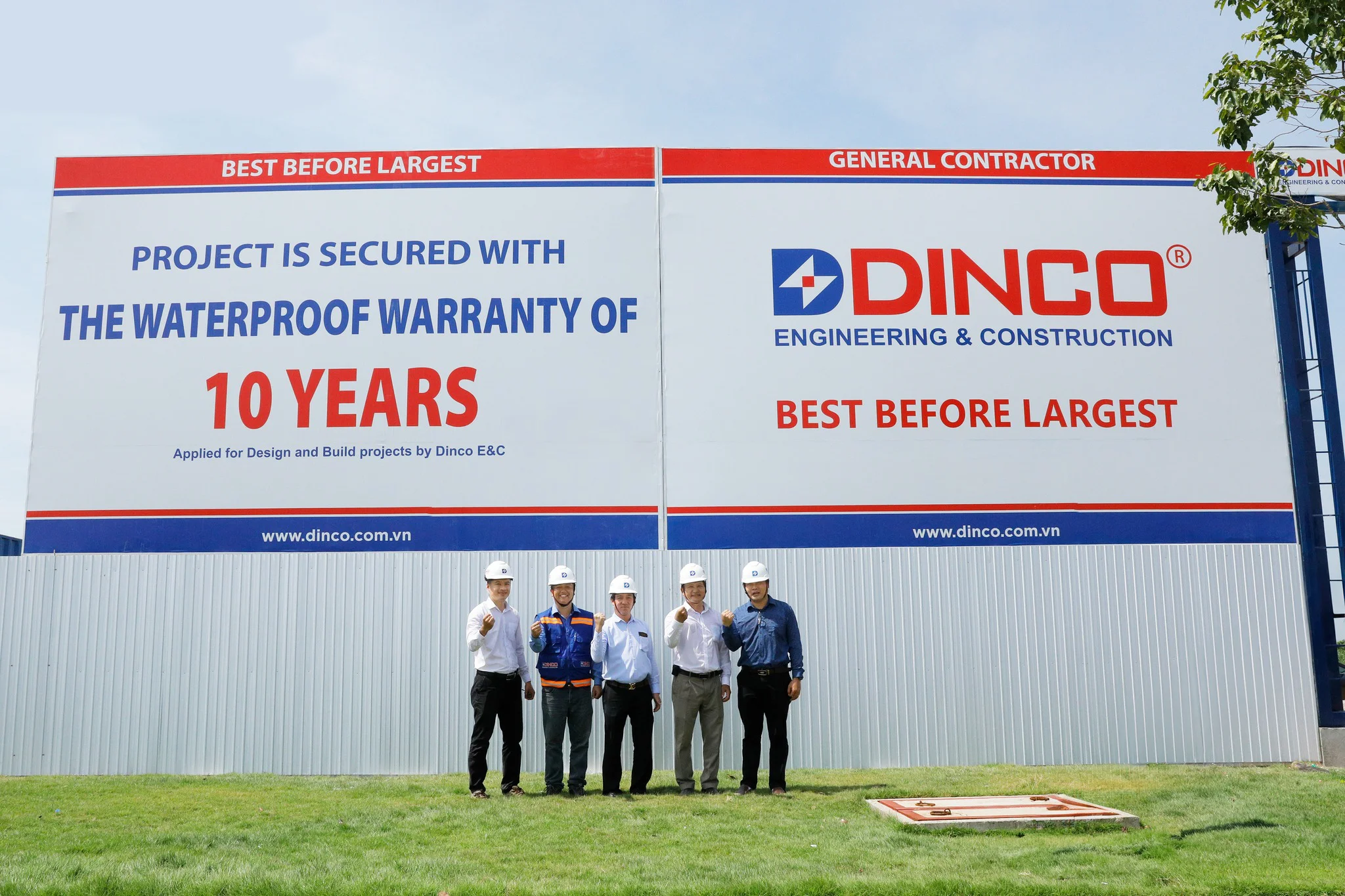
This approach is complemented by long-term operational standards, including over one million square meters of FM1-certified flooring, a 10-year waterproofing warranty, and post-handover legal support services. Together, these solutions help investors reduce operational risks throughout the lifespan of their projects.
These principles have been successfully implemented in projects such as:
- ICT Vina III – Vietnam's first hydrogen fuel cell manufacturing plant;
- KP Aerospace Vietnam – an aerospace component manufacturing facility supplying Boeing and Airbus;
- Amazing Ecotech Textile – one of the large-scale textile manufacturing plants of the YaDong Group.
These facilities all require exceptional levels of precision, schedule control, and operational reliability. 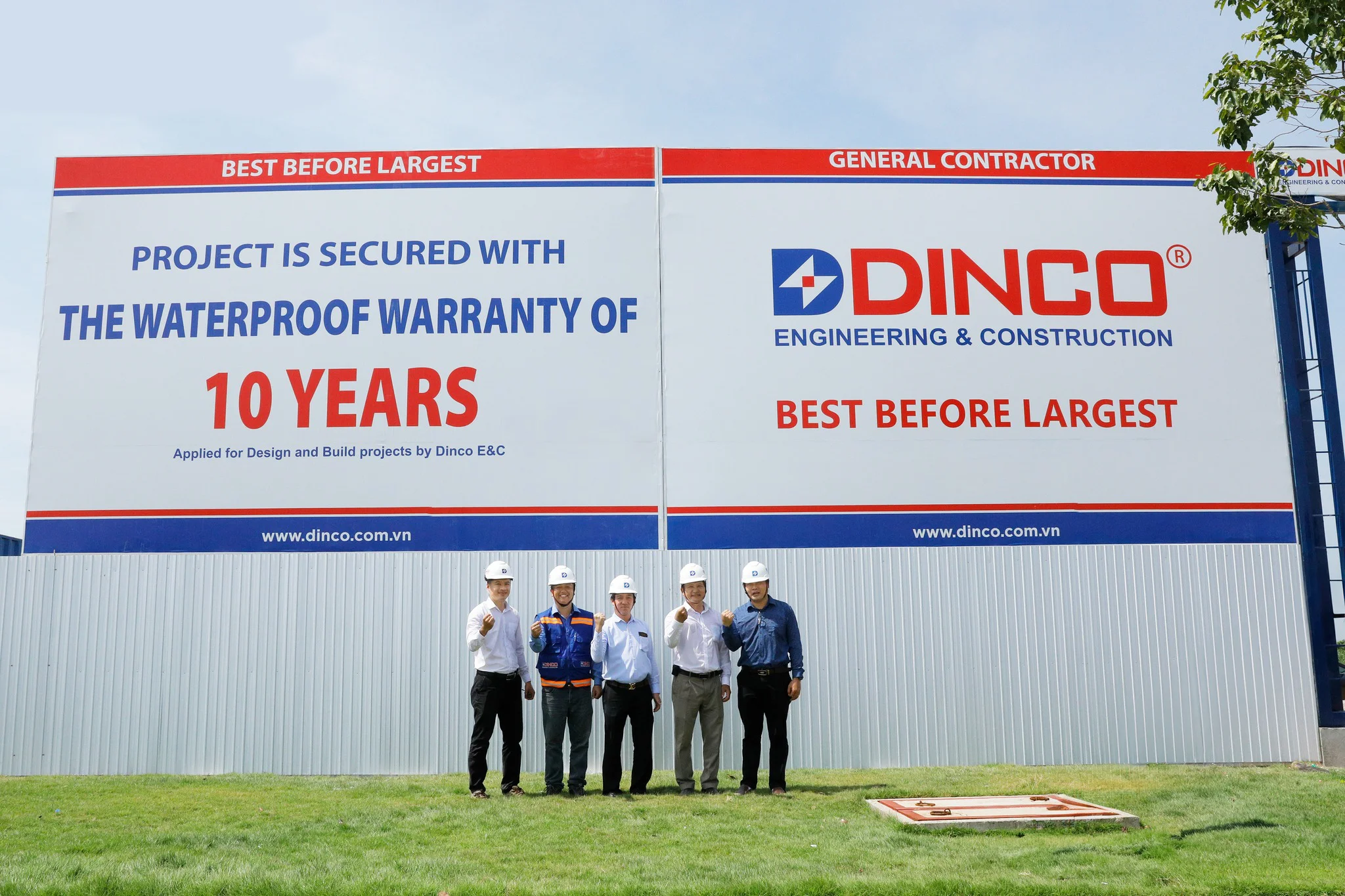 At the same time, many FDI clients continue to select Dinco for their expansion phases. One example is Happy Furniture Quang Ngai, where DINCO E&C has accompanied the client continuously from Phase 1 through Phase 5.
This demonstrates that the value of a general contractor is measured not only on the day of project handover but also by its ability to support the client's long-term growth and development.
Choosing the Right General Contractor Means Choosing a Competitive Advantage
As technology cycles continue to shorten, competitive advantage no longer begins with the production line. It begins with selecting the right partner before the first brick is laid.
Ultimately, the value of a general contractor is not defined by the structures they build. It is defined by the speed, certainty, and confidence with which they help their clients' investments create lasting value.
.webp)
Leave a comment