 by Admin
 When investing in a manufacturing facility, companies typically focus on core factors such as production capacity, floor area, production lines, costs, schedule, and operational efficiency.
However, a factory encompasses another critical element: people.
It is a place where hundreds, sometimes thousands, of individuals work every day. As a result, the way a facility is designed and organized affects not only production performance but also the working environment and user experience for years to come.
From this perspective, greenery, open spaces, gardens, and water features are more than aesthetic elements. They can become an integral part of modern industrial design thinking.
When a Green Space Raises a Bigger Question
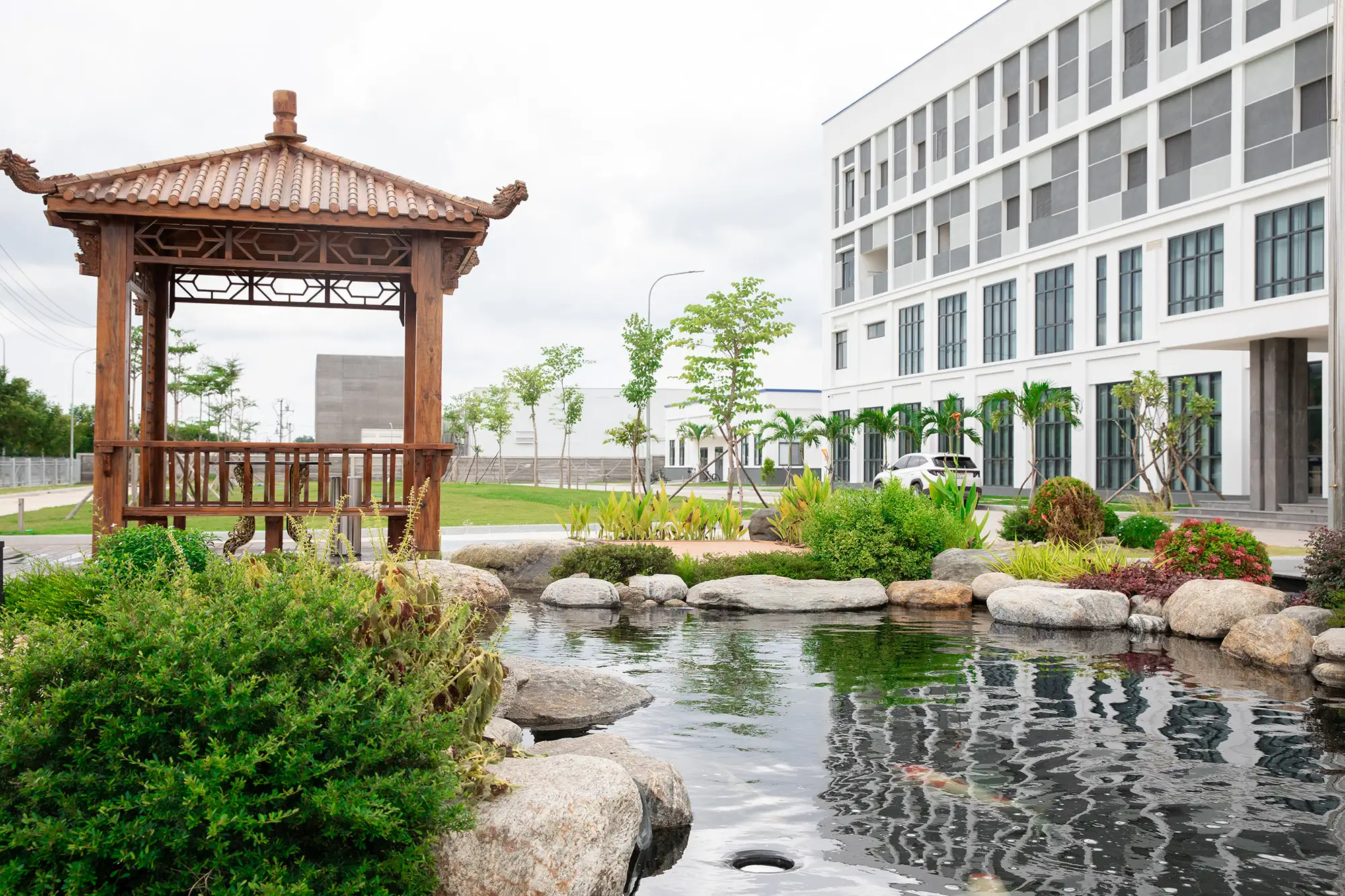
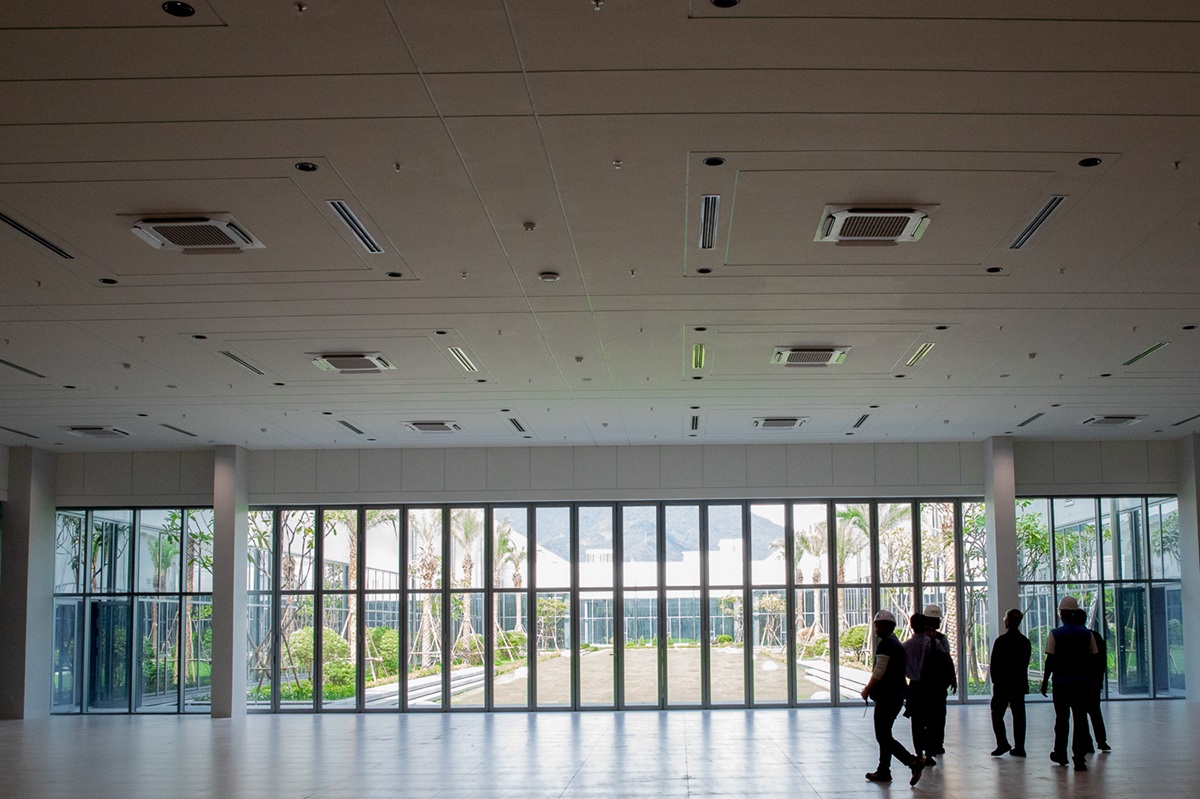
At ICT Vina III, the first hydrogen fuel cell manufacturing plant in Vietnam, a landscaped green space positioned between building blocks creates a clear transition between different production areas.
This green space does not directly produce any products.
Yet it raises a more important question for investors to consider:
If a factory is where people spend a significant portion of their day, should their experience be considered from the earliest stages of design?
This does not mean that a factory should be transformed into a resort-like environment. Production functionality, logistics, safety, fire protection, and operational efficiency must remain top priorities.
The challenge lies in finding the right balance between production, people, and space.
People Are Also Part of the Operating Environment
In industrial projects, every square meter is expected to generate value. Consequently, landscape areas are sometimes viewed as investments that do not directly contribute to revenue generation.
However, research on industrial and workplace environments suggests that open spaces and access to greenery are associated with more positive employee experiences.
A study by Western Sydney University found that incorporating natural elements such as green trees, daylight, ventilation, and open spaces into the workplace can positively influence employee well-being and overall workplace experience.
This does not mean that greenery automatically increases productivity. What it does suggest, however, is something worth considering: the physical environment forms an important part of the overall work experience and should be evaluated alongside operational requirements.
Natural lighting, ventilation, circulation routes, rest areas, and open spaces can all be integrated into a facility's design without compromising its industrial function.
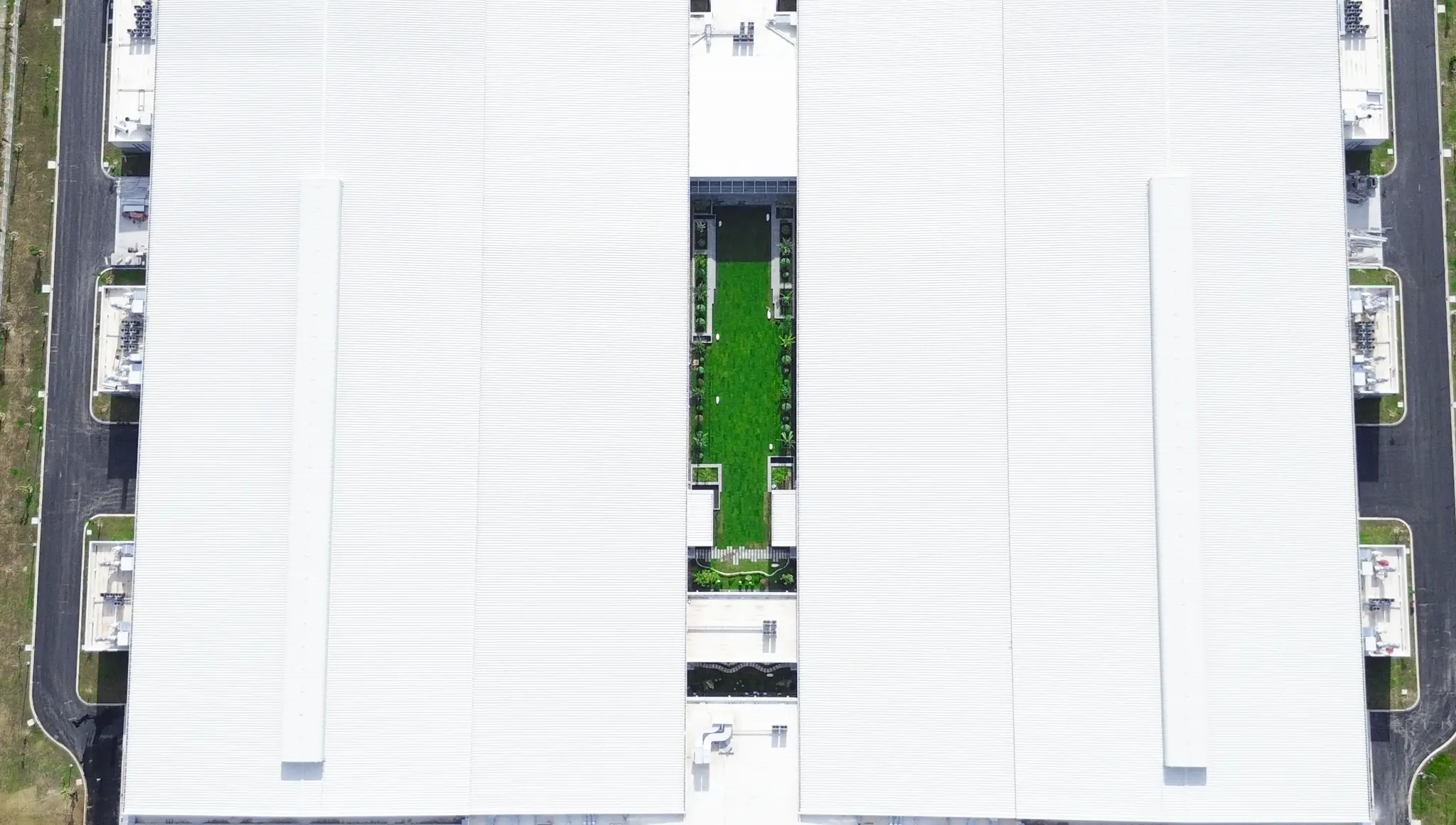
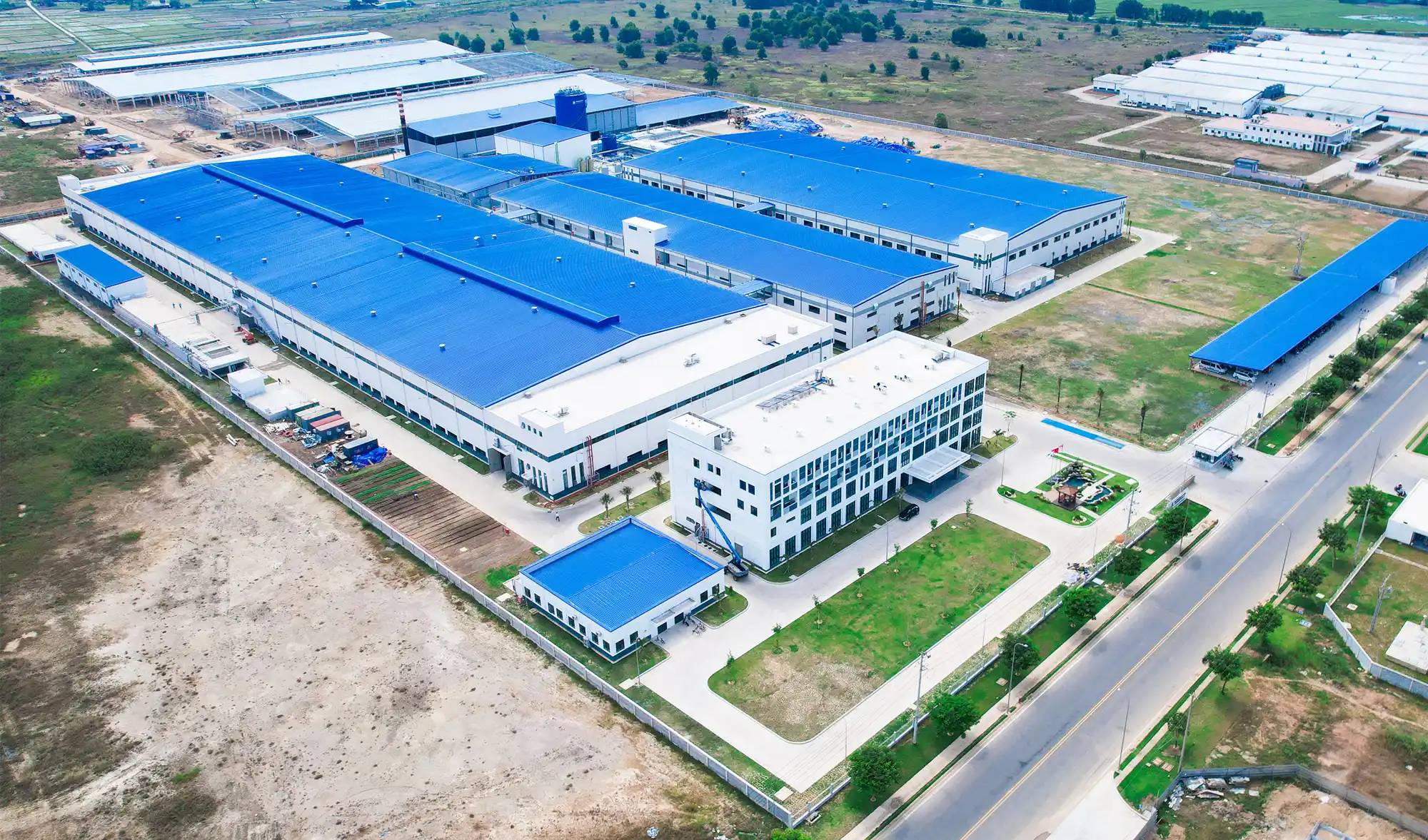
At the Amazing Ecotech Textile Quang Ngai Factory, the facility's grounds have also been designed with landscaped gardens, greenery, and koi ponds.
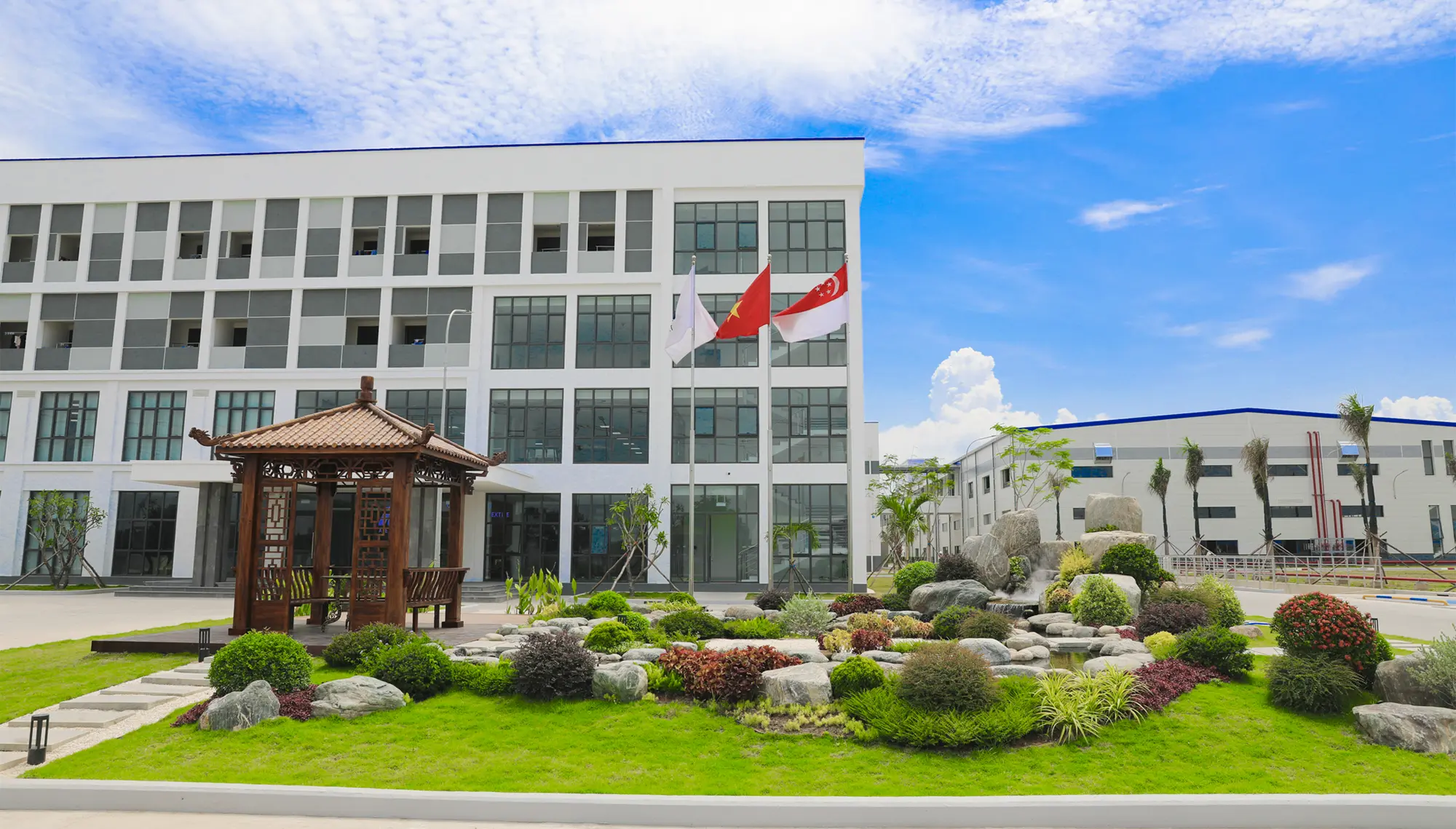
While ICT Vina III creates a distinctive identity through a green courtyard between production blocks, Amazing Ecotech adopts a different approach by incorporating gardens and water features.
Although the two projects differ in industry and spatial organization, both reflect a growing trend: landscape design is increasingly being considered an integral component of the factory rather than merely the leftover space after production facilities have been planned.
Today, many industrial developments incorporate courtyards, green spaces, natural ventilation, and employee recreation areas directly into the master planning and architectural design process.
This reflects an emerging perspective: factories are no longer designed solely for machinery and processes, but also for the people who operate them.
Designing for People Without Compromising Efficiency
For investors, the question should not simply be whether additional space should be allocated to landscaping. The more important question is: How can these spaces create value without compromising industrial efficiency?
The answer lies in thoughtful design from the outset.
Landscape elements must integrate seamlessly with the site master plan. Open spaces must not interfere with logistics operations. Employee rest areas must meet practical needs while remaining fully compliant with fire safety, operational, and regulatory requirements.
This is evolves from an architectural concept into a strategic component of long-term investment planning.
A Factory Is Also a Reflection of the Company
For many FDI companies, a factory in Vietnam is more than a production site. It is also a representation of the company to its employees, customers, partners, and the local community.
A well-designed environment can reflect how a company approaches quality, safety, sustainability, and people. Increasingly, these considerations are also aligned with broader environmental, social, and sustainability objectives.
Automation, AI, robotics, and intelligent management systems are transforming the way factories operate. Yet technology does not eliminate the role of people. Instead, it changes how people interact with machines, data, and space. As a result, the factory of the future will require not only smarter technologies but also better human experiences.
This is not about reducing the industrial nature of a facility. It is about creating an environment that can better meet the increasingly sophisticated demands of modern manufacturing.
.webp)
A Great Factory Creates More Than Products
For an FDI investor, building a factory is a long-term decision. Technology may evolve. Production lines may be upgraded. But the facility itself will continue to support manufacturing operations for many years.
That is why, alongside capacity, cost, and schedule, one important question deserves to be asked from the very beginning: What kind of factory are we building for the people who will operate it?
At ICT Vina III, the answer may be a green space connecting different production buildings. At Amazing Ecotech Textile, it may be a thoughtfully designed garden complemented by koi ponds.
These elements do not replace operational efficiency. However, when carefully planned and integrated, they contribute to a workplace environment that is better suited to people and more aligned with long-term development goals.
Because a great factory does more than producing goods. It creates the foundation for a business to operate, grow, and thrive for years to come.
.webp)
Leave a comment